Rahul Dravid Challenges Gautam Gambhir’s ‘No-Superstar’ Policy in Indian Cricket
Contents
The Ideological Divide: Dravid vs. Gambhir on Team Identity
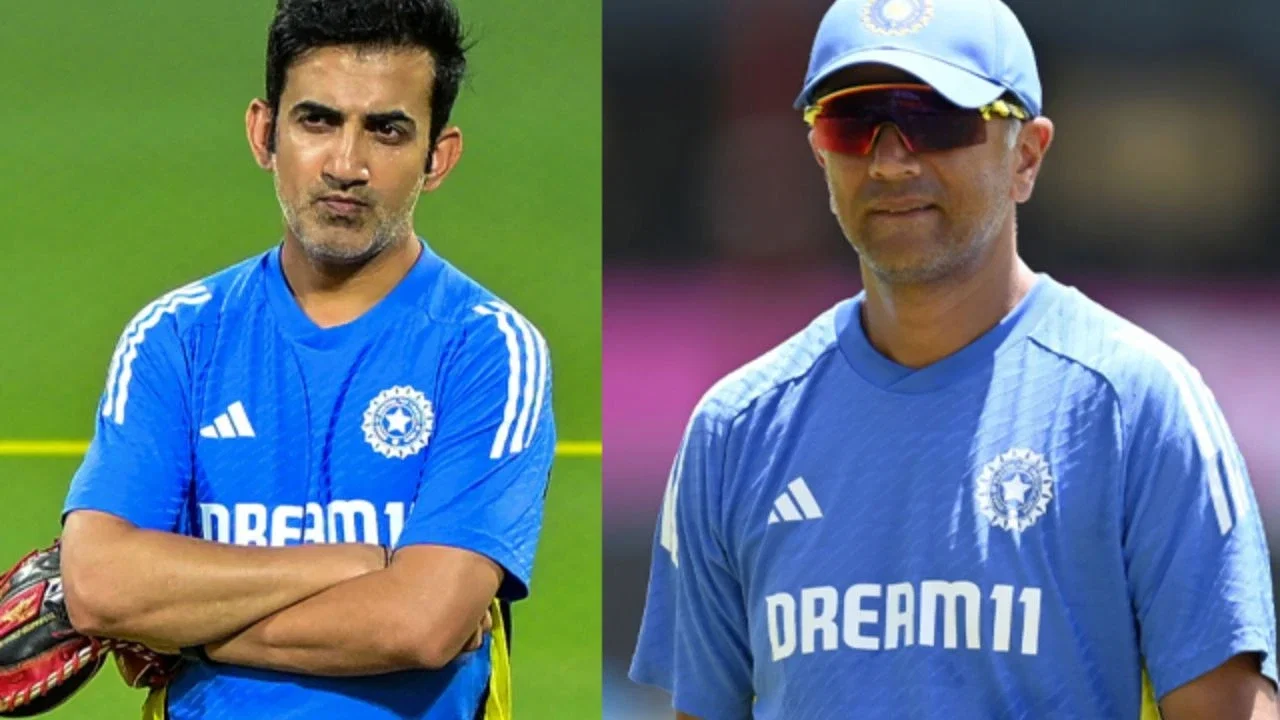
The landscape of Indian cricket is currently witnessing a significant ideological shift. Under the leadership of Gautam Gambhir, the team has adopted a ‘no-superstar’ policy, aiming to prioritize collective effort over individual branding. However, former head coach Rahul Dravid, the man who preceded Gambhir and led India to the 2023 WTC Final, has offered a contrasting perspective. Dravid believes that the quest for individual excellence is not a detriment but rather the essential building block for a team’s success.
Speaking on the Wisden on the Scoop podcast, Dravid emphasized that icons are necessary for the growth and inspiration of the game. He argued that the status of a ‘superstar’ is earned through consistent performance on the field, which naturally translates into victories for the nation. For Dravid, the heroes of Indian cricket, such as Virat Kohli, are products of their own immense contributions to the team’s cause.
The Red-Ball Crisis: A Drastic Shift in Fortunes
While the Indian team has enjoyed remarkable success in shorter formats under Gambhir—securing the 2025 Champions Trophy and the 2026 ICC T20 World Cup—the longest format of the game has told a much darker story. The transition in leadership has coincided with a period of historic struggle in Test cricket. For the first time in decades, India has looked vulnerable on home soil, facing consecutive whitewashes against New Zealand in 2024 and South Africa in 2025.
The impact of these losses is reflected in the World Test Championship (WTC) standings. After reaching the finals in two of the first three seasons, India failed to make the cut for the 2025 final. According to current projections and the points table, the prospects for the 2027 final look equally bleak. The gap between India and the top contenders has widened, leaving the team with a mountain to climb to regain its dominance in red-ball cricket.
Dravid on the Necessity of Heroes
During his interview, Dravid was transparent about his disagreement with the current coaching philosophy regarding superstars. “Any sport needs its heroes, and I don’t think people become heroes without performances,” Dravid stated. He noted that in a country as cricket-obsessed as India, the spotlight is unavoidable, and becoming a legend is a testament to a player’s ability to thrive under scrutiny.
He further elaborated: “You can’t capture the imagination of a nation if you don’t deliver on the field… To become a legend or a superstar in India means you’ve done a lot of things right, and in the process, you’ve also helped your team win.” This perspective suggests that the ‘superstar’ label is a byproduct of team-oriented success, rather than a distraction from it.
The Void Left by Retiring Legends
One of the primary reasons cited for India’s recent struggles is the departure of veteran stalwarts. The retirement of Rohit Sharma, Virat Kohli, and Ravichandran Ashwin has left a void that the current setup is struggling to fill. Dravid acknowledged that replacing players of such caliber is an enormous task for any coaching staff.
“We are missing a few key players… and it is not easy to replace players like that,” Dravid admitted. He noted that while the passion for Test cricket remains high among the younger generation, the lack of experienced heads in the dressing room has made the transition more difficult than anticipated. However, he remains optimistic that the team is in a phase of evolution and will eventually find its footing again.
The Challenge of Modern Scheduling
Beyond the philosophical debate, Dravid highlighted a practical challenge facing modern cricketers: the sheer volume of matches. Unlike his generation, which could focus more intently on Test preparation, today’s players are constantly toggling between three formats. This lack of specialized preparation time has, in his view, led to the inconsistency seen in recent Test series.
“Many of these players today are having to juggle multiple formats, and it is not always easy because they may not get as much time to prepare for red-ball cricket as my generation did,” Dravid explained. He noted that while Test cricket is still viewed as the ‘toughest format’ and the most satisfying by the players, the reality of the international calendar makes it difficult to maintain the required balance for long-form success.
Looking Ahead: Can India Bounce Back?
Despite the current slump, Dravid maintains that Indian cricket remains fundamentally strong. The challenge for Gautam Gambhir and the selection committee will be to find a way to integrate the ‘hero-making’ performances Dravid spoke of into a system that still values collective unity. As India looks toward the next cycle of the WTC, the balance between nurturing individual icons and maintaining a cohesive team identity will be the defining theme of this era.