
Babar Azam: Poor Shot Selection Led to Pakistan’s Batting Collapse

Contents
Babar Azam: Poor Shot Selection Led to Pakistan’s Batting Collapse
Babar Azam believes Pakistan’s batting collapse in the Sylhet Test was more about poor shot selection than Bangladesh’s bowling brilliance.
Bangladesh’s bowling attack has been in excellent form in recent months, and the Sylhet Test has been no different. Defending a first-innings total of 278, the Tigers managed to bowl Pakistan out for 232 and earned a valuable 46-run lead.
Babar’s Fighting Innings
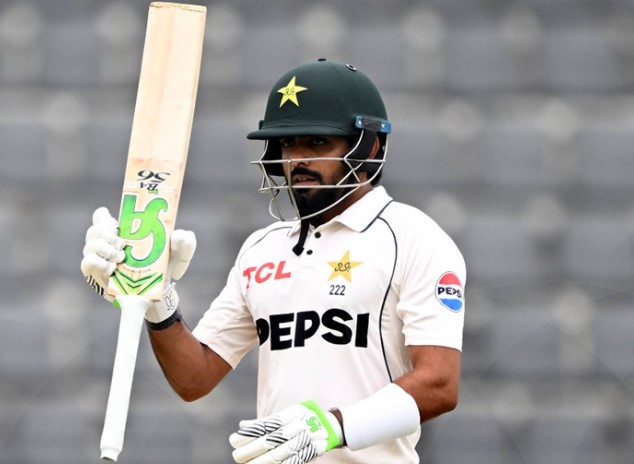
Babar was the lone bright spot for Pakistan with a fighting 68-run innings. He was not only Pakistan’s top scorer but also the only batter from his side to reach a half-century. Still, the former Pakistan captain refused to give full credit to Bangladesh’s bowlers.
Speaking after the second day’s play, Babar said, “No, I don’t think our batting failed simply because Bangladesh bowled very well. Their bowling was good, but we gave away too many soft wickets.”
Pitch Conditions
The Pakistan star also had no complaints about the pitch in Sylhet. In fact, he felt the wicket was quite good for batting. “Honestly, the wicket is very good. The ball is coming nicely onto the bat. We just failed to build partnerships. We had a decent start. Salman and I were trying to build a partnership, but it didn’t become a big one.”
According to Babar, the dismissals of himself and Salman Ali Agha changed the direction of the match. “The turning point was my wicket and Salman’s wicket. After that, there was no significant partnership. Those two dismissals changed the momentum completely.”
No Mental Block
Pakistan have already lost three straight Tests against Bangladesh national cricket team. If they lose again in Sylhet, it will become four in a row. However, Babar rejected the idea that Pakistani batters now have a mental block against Bangladesh’s bowlers. “No, both teams have played against each other many times. I don’t think there’s any mental barrier. The problem is that our partnerships are too small. In Test cricket, you need two or three big partnerships to do well.”